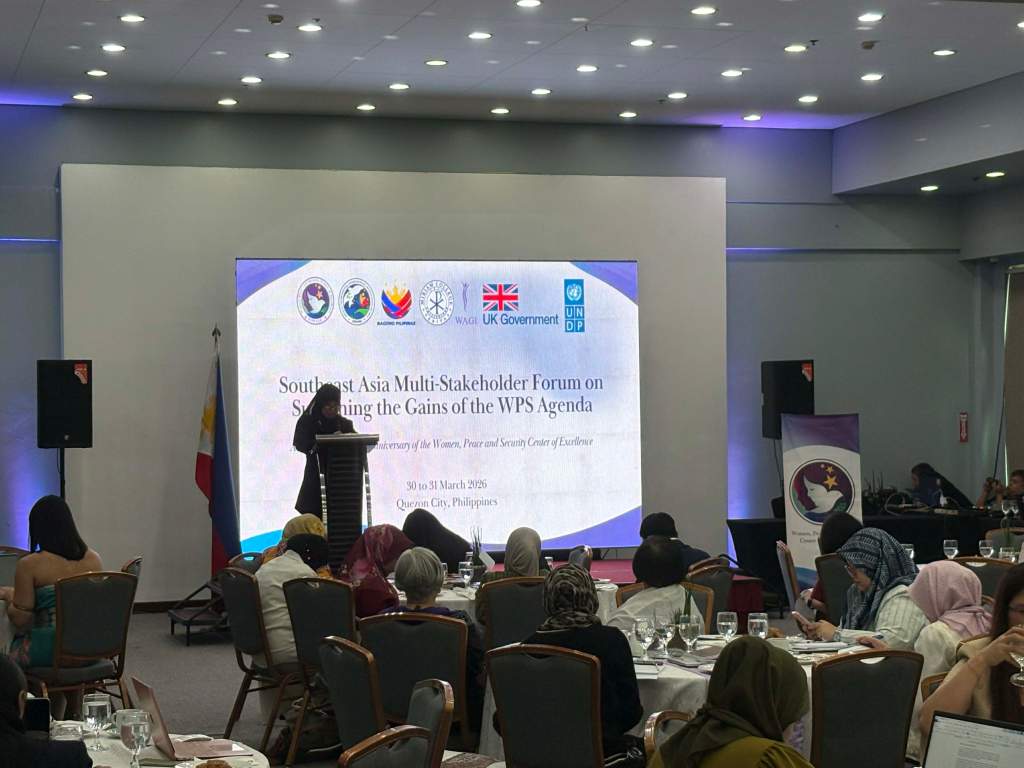
ASEAN Region, March 30, 2026 – A strong call to center women and communities in peacebuilding efforts resonated at the Southeast Asia Multi-Stakeholder Forum on Sustaining the Gains of the WPS Agenda, organized by the Office of the Presidential Adviser on Peace, Reconciliation and Unity (OPAPRU) and held from March 29–31, 2026 in Quezon City, Philippines. At the forum, Baina T. Samayatin, Executive Director of the Moro Women Development and Cultural Center, Inc. (MWDECC), presented the Bangsamoro experience in advancing Women, Peace, and Security (WPS) at the grassroots level.
Drawing from years of community engagement across the Bangsamoro Autonomous Region in Muslim Mindanao (BARMM), Samayatin emphasized that sustainable peace is not imposed from the top but “co-created” through inclusive, community-driven processes. “Peace lasts when women lead, communities are heard, and government institutions respond,” she emphasized during her presentation
Women at the Center of Peacebuilding
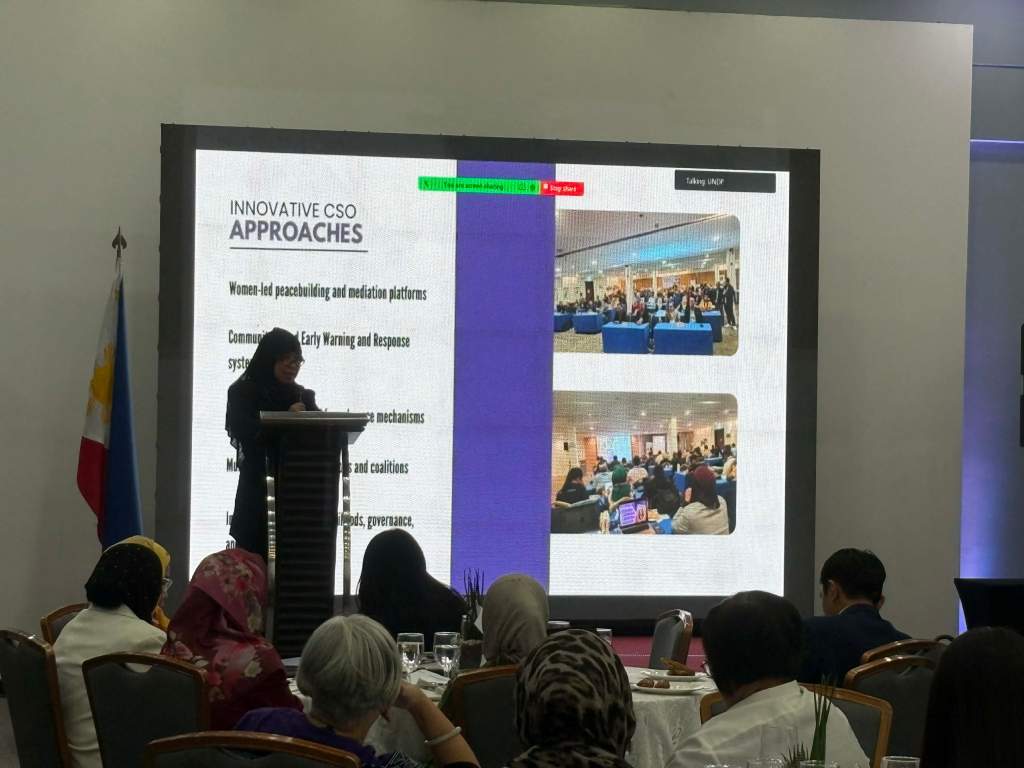
The presentation highlighted innovative approaches led by civil society organizations (CSOs), particularly women-led platforms that facilitate mediation, dialogue, and conflict resolution at the local level. These initiatives include community-based Early Warning and Early Response (EWER) systems, enabling timely identification and mitigation of conflict risks.
Samayatin also emphasized the importance of bridging grassroots initiatives with formal peace mechanisms to ensure that local voices infrm institutional decision-making. Multi-stakeholder consultations and coalitions – bringing together communities, government actors, and civil society – were cited as critical in shaping responsive and inclusive peace processes.
Communities Speak: Persistent Challenges
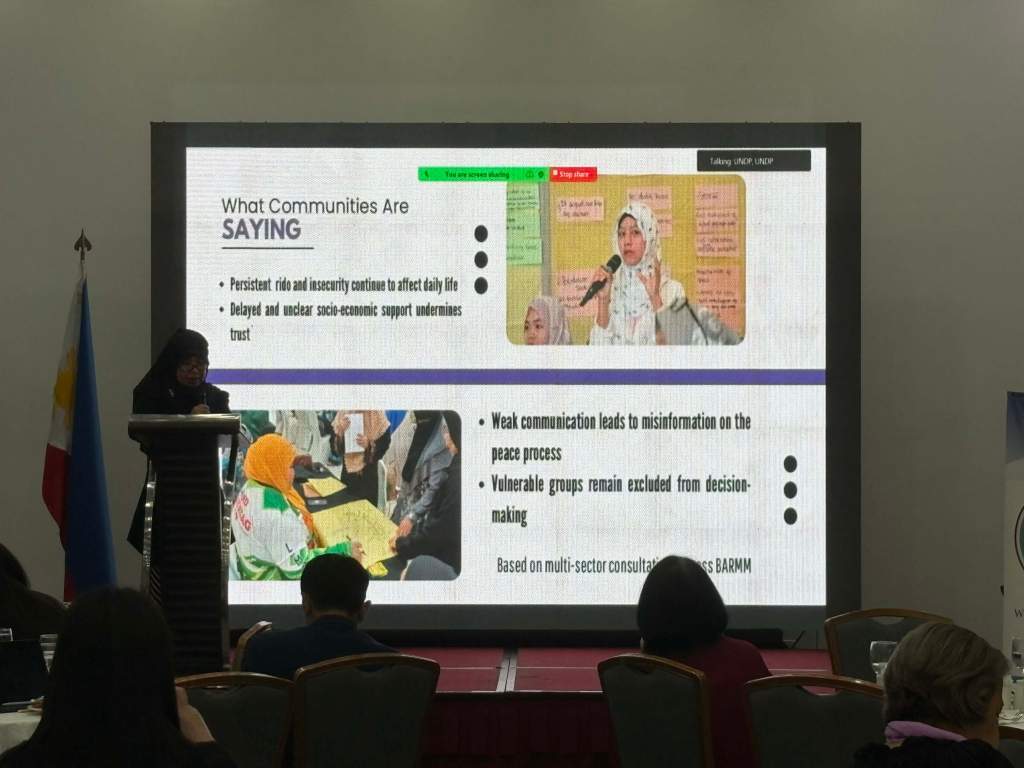
Insights gathered from consultations across BARMM revealed ongoing challenges affecting daily life. Communities reported persistent clan conflicts (rido), insecurity, and delays in socio-economic support, undermining trust in institutions. Weak communication channels have also contributed to misinformation about the peace process, while marginalized groups remain excluded from decision-making spaces.
“These realities highlight the gap between policy and lived experience,” Samayatin noted, stressing the need for more responsive and transparent systems.
Community-Driven Solutions
In response, grassroots actors have proposed practical, community-driven solutions. These include establishing Barangay Peace and Security Coordination Hubs, developing real-time conflict alert systems, and institutionalizing regular peace dialogues or “Peace Circles.”
Strengthening transparency in beneficiary systems and grievance mechanisms was also identified as a priority to rebuild trust between communities and institutions.
Key Lessons for the Region
The Bangsamoro experience offers valuable lessons for Southeast Asia. Central among these is the critical role of women’s leadership in driving sustainable peace. Community ownership ensures that interventions remain relevant and effective, while integrated approaches – linking peacebuilding with livelihoods, governance, transitional justice, and resilience – are critical to addressing historical grievances and the root causes of conflict.
Samayatin emphasized that collaboration across sectors and sustained trust-building are essential. “Our experience shows that peacebuilding works best when it is community-driven, inclusive, and connected to institutions,” she said.
Advancing an Inclusive WPS Agenda
The presentation underscored the importance of inclusivity, particularly in engaging marginalized groups such as Indigenous Peoples, internally displaced persons (IDPs), persons with disabilities, and survivors of gender-based violence. Women-led networks, cooperatives, and mediation groups were highlighted as key structures for advancing inclusive governance.
Capacity-building and feedback mechanisms that connect communities directly with institutions were also identified as crucial components of effective WPS implementation.
A Model for ASEAN
As ASEAN continues to strengthen its regional WPS agenda, the Bangsamoro experience offers a compelling model of how grassroots leadership and institutional collaboration can work together to sustain peace.
Samayatin concluded with a clear message to policymakers and practitioners across the region: “Effective WPS implementation must be community-driven, women-led, inclusive, institution-linked, and integrated across sectors.”Her presentation not only showcased grassroots innovations but also reinforced the critical role of community voices in shaping inclusive and sustainable peace across Southeast Asia – calling on governments and regional actors to place women and communities at the center of peacebuilding efforts
 Moro Women Development and Cultural Center, Inc. (MWDECC)
You must be logged in to post a comment.